A great man is one who collects knowledge the way a bee collects honey and uses it to help people overcome the difficulties they endure - hunger, ignorance and disease!
- Nikola Tesla

Remember, remember always, that all of us, and you and I especially, are descended from immigrants and revolutionists.
- Franklin Roosevelt

While their territory has been devastated and their homes despoiled, the spirit of the Serbian people has not been broken.
- Woodrow Wilson

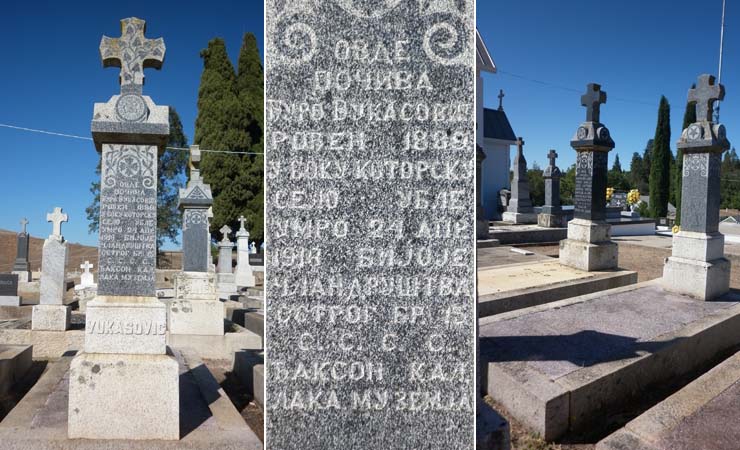
Stanislava 1906 - 1907, Petar M. 1861 - 1906, Nane A. 1877 - 1944

OVDIJE POCIVA

  STANISLAVA

P. VUKASOVICH

   RODJENA

SUTTER CREEK

 11 OTO. 1906

     UMRLA

22. MAJA 1907

   LAKA TI 

   ZEMLJA


OVDIJE POČIVA

    PETAR M.

VUKASOVICH

  RODJEN

U LIPCE BOKI

KOTTORSKOJ

   AUSTRIA

19. DEC. 1861

    UMRO

27 DEC. 1906

SUTTER CREEK

   VJEČNAJA

     PAMJAT


 OVDIJE POCIVA

        NANE

 A. VUKOVICH

  PRIJED BILA 

 VUKASOVICH

R. JANUVARA 10, 1977

      UMRLA

SEPTEBRA 5, 1944

   VJECNAJOJ

     PAMJAT

I POKOJ DUSI


SA


People Directory

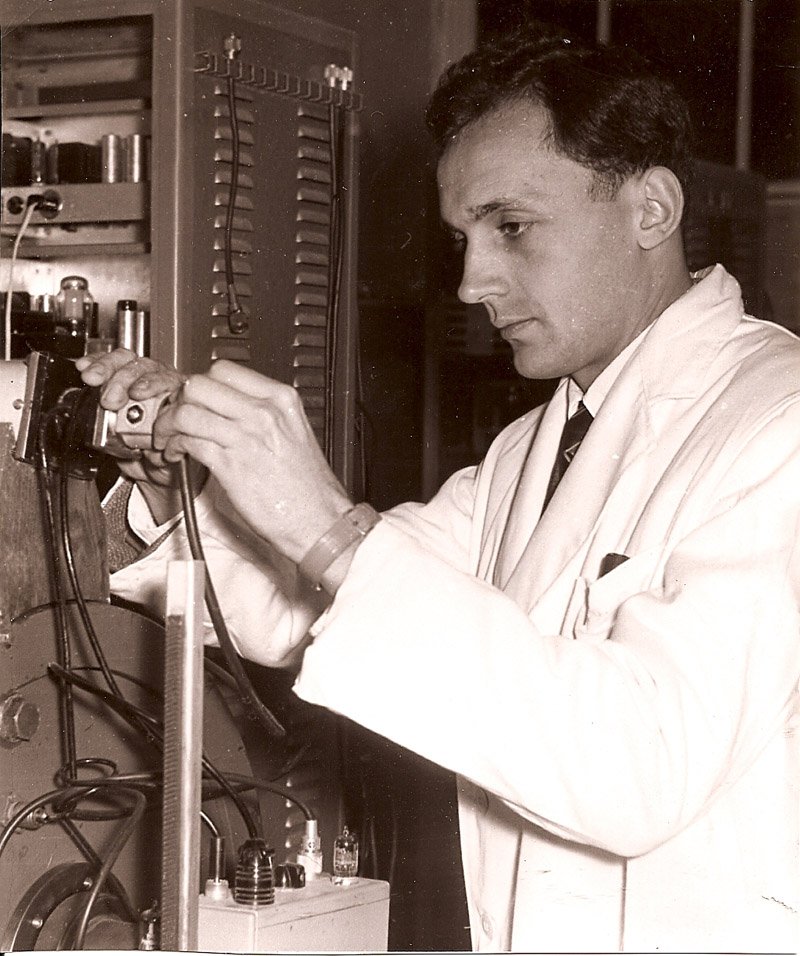
Tihomir Novakov

Tihomir Novakov, Ph.D, known also as Tica Novakov (born March 16, 1929) is an American physicist. As a scientist, Novakov is known for his black carbon, air quality, and climate change research.

After graduating from the University of Belgrade with a PhD in Nuclear Physics, he taught at the University of Belgrade and worked at the Vinca Nuclear Institute. Novakov immigrated to the United States in 1963 and began working as a research scientist at the Lawrence Berkeley National Laboratory. He later founded an Aerosol Research Group, which traveled the world conducting ground breaking research on climate change. Dr. Novakov is a distinguished member of the Serbian Academy of Sciences and Arts.

.
Read more ...

Publishing

History, Truth, Holiness

by Bishop Maxim Vasiljevic

Bishop Maxim’s first book, described by Fr. John Breck as an “exceptionally important collection of essays” contributing to both the theology of being and also contemporary theological questions, is now available! Christos Yannaras describes Bishop Maxim as “a theologian who illumines” and Fr. John McGuckin identifies his work as “deeply biblical and patristic, academically learned yet spiritually rich.” The first half of the book collects papers emphasizing theological ontology and epistemology, reminding us how both the mystery of the Holy Trinity and that of the Incarnation demand that we rethink every philosophical supposition; it includes chapters on holiness as otherness, truth and history, and the biochemistry of freedom. The second half of the book features lectures dedicated to the theological questions posed by modern theology, including studies of Orthodox and Roman Catholic ecclesiology, liturgics, and the theology of icons.