A great man is one who collects knowledge the way a bee collects honey and uses it to help people overcome the difficulties they endure - hunger, ignorance and disease!
- Nikola Tesla

Remember, remember always, that all of us, and you and I especially, are descended from immigrants and revolutionists.
- Franklin Roosevelt

While their territory has been devastated and their homes despoiled, the spirit of the Serbian people has not been broken.
- Woodrow Wilson

On Divine Philanthropy

From Plato to John Chrysostom

by Bishop Danilo Krstic

This book describes the use of the notion of divine philanthropy from its first appearance in Aeschylos and Plato to the highly polyvalent use of it by John Chrysostom. Each page is marked by meticulous scholarship and great insight, lucidity of thought and expression. Bishop Danilo’s principal methodology in examining Chrysostom is a philological analysis of his works in order to grasp all the semantic shades of the concept of philanthropia throughout his vast literary output. The author overviews the observable development of the concept of philanthropia in a research that encompasses nearly seven centuries of literary sources. Peculiar theological connotations are studied in the uses of divine philanthropia both in the classical development from Aeschylos via Plutarch down to Libanius, Themistius of Byzantium and the Emperor Julian, as well as in the biblical development, especially from Philo and the New Testament through Origen and the Cappadocians to Chrysostom.

With this book, the author invites us to re-read Chrysostom’s golden pages on the ineffable philanthropy of God. "There is a modern ring in Chrysostom’s attempt to prove that we are loved—no matter who and where we are—and even infinitely loved, since our Friend and Lover is the infinite Triune God."

The victory of Chrysostom’s use of philanthropia meant the affirmation of ecclesial culture even at the level of Graeco-Roman culture. May we witness the same reality today in the modern techno-scientific world in which we live.

SA


People Directory

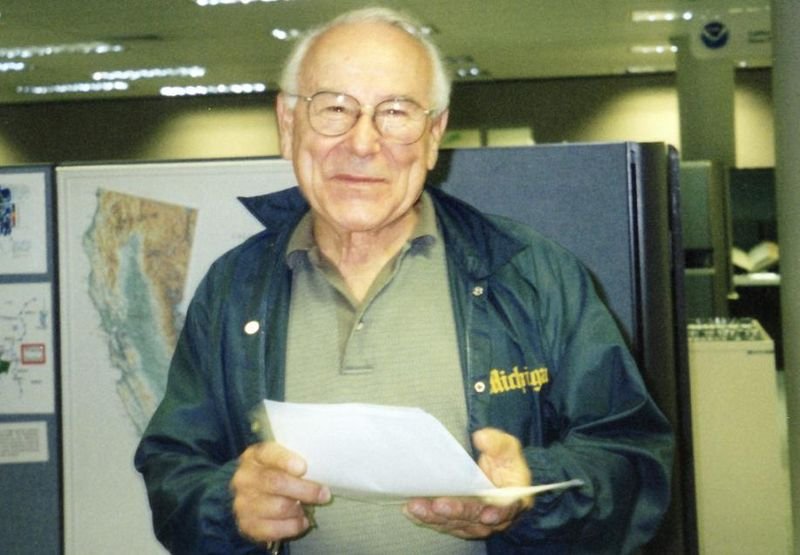
Milo Radulovich

Milo John Radulovich (October 28, 1926 – November 19, 2007) was an American citizen (born in Detroit) of Serbian descent and former reserve Air Force lieutenant who was accused of being a security risk for maintaining a "close and continuing relationship" with his father and sister, in violation of Air Force regulation 35-62. His case was publicized nationally by Edward Murrow on October 20, 1953, on Murrow's program, See It Now:

“That [Air Force regulation 35-62] is a regulation which states that 'A man may be regarded as a security risk if he has close and continuing associations with communists or people believed to have communist sympathies.' Lieutenant Radulovich was asked to resign in August. He declined. A board was called and heard his case. At the end, it was recommended that he be severed from the Air Force. Although it was also stated that there was no question whatever as to the Lieutenant's loyalty.—Edward R. Murrow”

.
Read more ...

Publishing

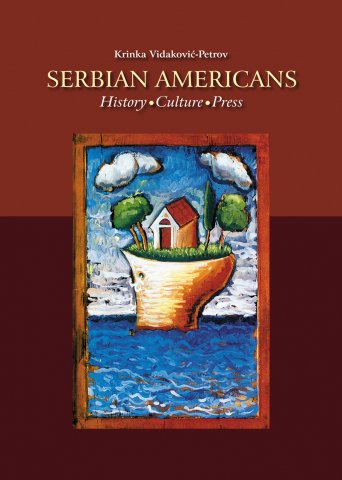
Serbian Americans: History—Culture—Press

by Krinka Vidaković-Petrov, translated from Serbian by Milina Jovanović

Learned, lucid, and deeply perceptive, SERBIAN AMERICANS is an immensely rewarding and readable book, which will give historians invaluable new insights, and general readers exciting new ways to approach the history​ of Serbian printed media. Serbian immigration to the U.S. started dates from the first few decades of 19th c. The first papers were published in San Francisco starting in 1893. During the years of the most intense politicization of the Serbian American community, the Serbian printed media developed quickly with a growing number of daily, weekly, monthly and yearly publications. Newspapers were published in Serbian print shops, while the development of printing presses was a precondition for the growth of publishing in general. Among them were various kinds of books: classical Serbian literature, folksong collections, political pamphlets, works of the earliest Serbian American writers in America (poetry, prose and plays), first translations from English to Serbian, books about Serb immigrants, dictionaries, textbooks, primers, etc.

Read more ...