A great man is one who collects knowledge the way a bee collects honey and uses it to help people overcome the difficulties they endure - hunger, ignorance and disease!
- Nikola Tesla

Remember, remember always, that all of us, and you and I especially, are descended from immigrants and revolutionists.
- Franklin Roosevelt

While their territory has been devastated and their homes despoiled, the spirit of the Serbian people has not been broken.
- Woodrow Wilson

Syrian Christian Looking for a Place in Herzegovina

Interview with Archbishop Benjamin (Atas) of the Syriac Orthodox Church in Sweeden
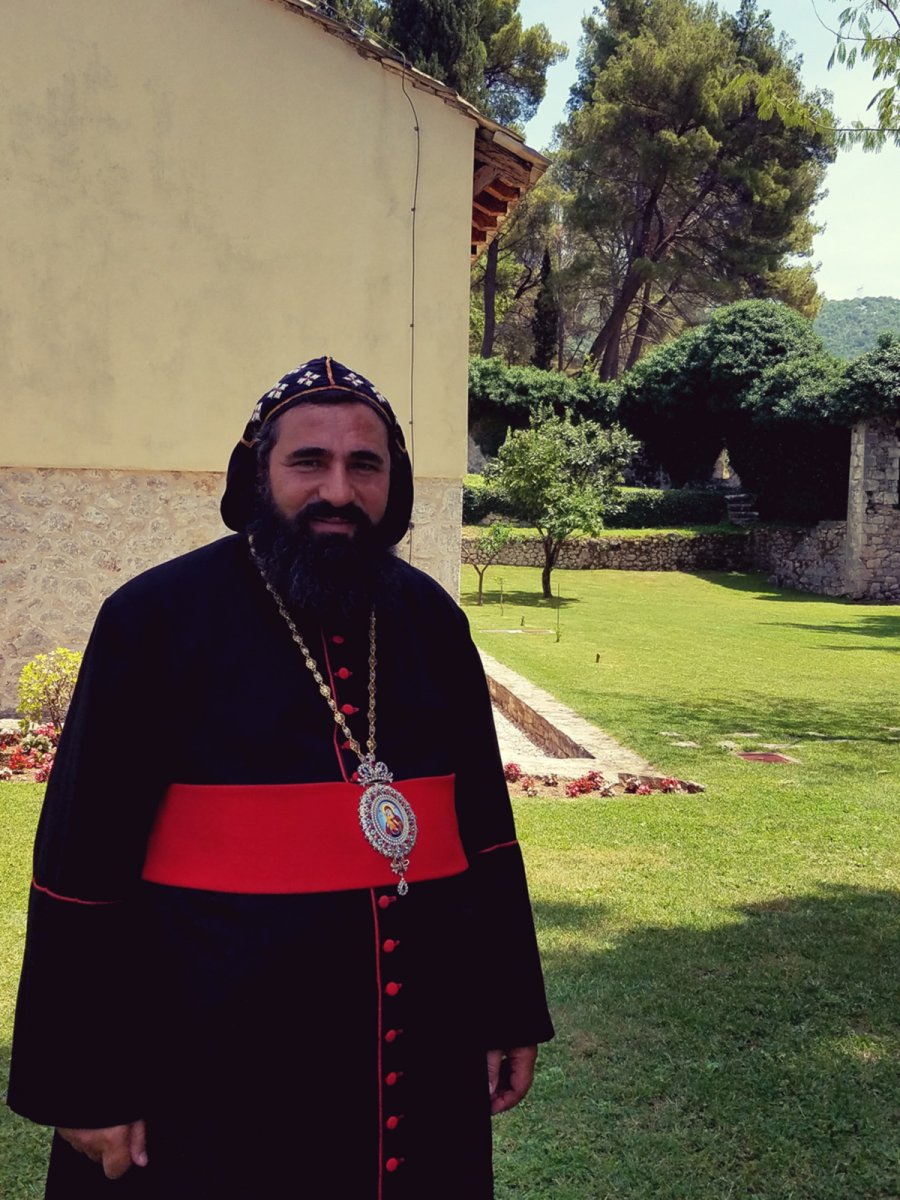
H.E. Mor Dioscoros Benyamin Atas belongs to the Holy Synod of the Syriac Orthodox Church of Antioch (Eastern Orthodox, Non-Chalcedonian). He was born on 3rd January 1964 in Bakisyan, Turkey. His elementary education was in the local village school from where he learned the basics of Turkish language. In 1989 Benyamin was ordained a priest. As a priest, he was deeply involved in looking after the spiritual needs of the diocese where he preached the faithful, the Christian teachings and the true faith. He also inspired the faithful, irrespective being young or old, to study the Syriac language. When the Syriac letters were available on computers, H.E. started to write books, some of which were published later. During these days, he studied German and English languages also. Later he went to U.S.A for three years to have his theological studies in a Roman Catholic university in New Jersey. While in U.S.A he served the church assemblies in Washington, New York, Chicago, Florida and New Jersey.  In 1995 he headed for the patriarchate in Syria on the request of His Holiness the Patriarch. Being in the patriarchate H.E. was dressed with the holy cross and sent to the new diocese in Sweden as a substitute. On February 11, 1996, H.E was consecrated Metropolitan and was appointed as the Patriarchal-Vicariate for the Archdiocese of Sweden.

1.Your Grace, can you tell us about Syriac Church in Sweden? How many Syrian people lives in Sweden?
Archbishop Benjamin: Syriac Church in Sweden is sister Church with Coptic and Armenian Church. We are family in Orthodox Theology and we have eight Churches with its representatives. Also, we have Seminary, School of Theology in Stockholm. Many Syrian people live in Sweden. Latest count was 100.000, but we don’t know exact number due to many refugees.

2. The conflict in Syria is the one that involves foreign interests…How do Syriac-Swedish people look on that? If no solution is found in Syria, the crisis of refugees will continue in Europe…
Аrchbishop Benjamin: Unfortunately, that is true. There is many politics involved, there is never fighting for nothing. When the wolf comes out of forest to kill, the doesn’t think of the reason for it, it is in his nature to kill. The same with ISIS. The solution of this conflicts is in God’s hands. And that is why it is important that we find country for our Syrian people to stay, to build their homes, with ones like them, to work, and raise their families. Not to go around without having place to stay.

3. Is this the reason for your visit to Hercegovina?
Аrchbishop Benjamin: Bishop Grigorije is my friend. He visited our country and he and Patriarch Irinej invited me to visit Serbia and Hercegovina. This is the place where I can see my people to come and stay. This is very like Syria, with climate, with mentality of people who live here. Christians here went through war; they went to same suffering as my people. History repeats itself. Serbia and Hercegovina can give more to Syrians than Europe.

4. People of Syria and Serbian Orthodox Christians have lot in common, when you consider the history, however, they do have lots of differences. Do you think they will be able to live together and to overcome differences?
Аrchbishop Benjamin: We are all Orthodox Christians, and we all have one faith-Christian faith! Because every country has its own Patriarch, it is not anyone’s fault. We need to work on that. We have two sets of churches, oriental and byzantine. But being together, in love, is what is most important. We need to learn to love our neighbors, our friends no matter what religion they belong to. There are many Syrian business man who want to invest here. I trust this country. I feel like home here. It is our responsibility to fix and rebuild the bridges and differences, so our children can cross over them safely.

5. On our way to Mostar, we visited Prebilovci, small village and new Church build in the memory of Serbians who were genocide by Croatian people. What were your feelings there?
Archbishop Benjamin: I was very sad and disturbed. I can see why Muslims kill Christians, but I just can’t understand why Christians kill other Christians.

6. As a part of Sebastian Press publishing ministry, I would like to ask you, do you write?
Archbishop Benjamin: I must say, I don’t have time for writing at this moment.

7. If anyone wants to learn more about you, where can we find something?
Archbishop Benjamin: “Suryoyo Sat” uploads my messages and videos, and there will be more in near future.

8. Is there anything else you would like to say?
Archbishop Benjamin: Yes, let’s take a picture. Lots of pictures, at this beautiful place.

Interviewed by Radmila Bojovic
Monastery Zitomislic, Hercegovina
June 16th, 2017


SA


People Directory

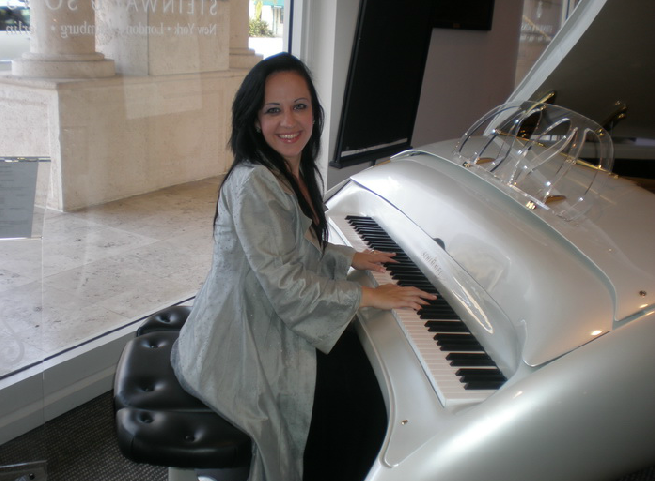
Jelena Vuckovic

Jelena Vuckovic is a professor in the Department of Electrical Engineering and Ginzton Laboratory at Stanford University, where she leads the Nanoscale and Quantum Photonics Lab. She received her PhD degree in Electrical Engineering from the California Institute of Technology (Caltech) in 2002, and M.Sc. and Diploma in Engineering degrees from Caltech and University of Nis, Serbia, respectively. Upon graduation from Caltech, she has held the following positions at Stanford University: a postdoctoral scholar (January-August 2002), an acting assistant professor (August-December 2002), an assistant professor (January 2003-August 2008), an associate professor of electrical engineering with tenure (September 2008- January 2013), and a professor of electrical engineering (since February 2013).

.
Read more ...

Publishing

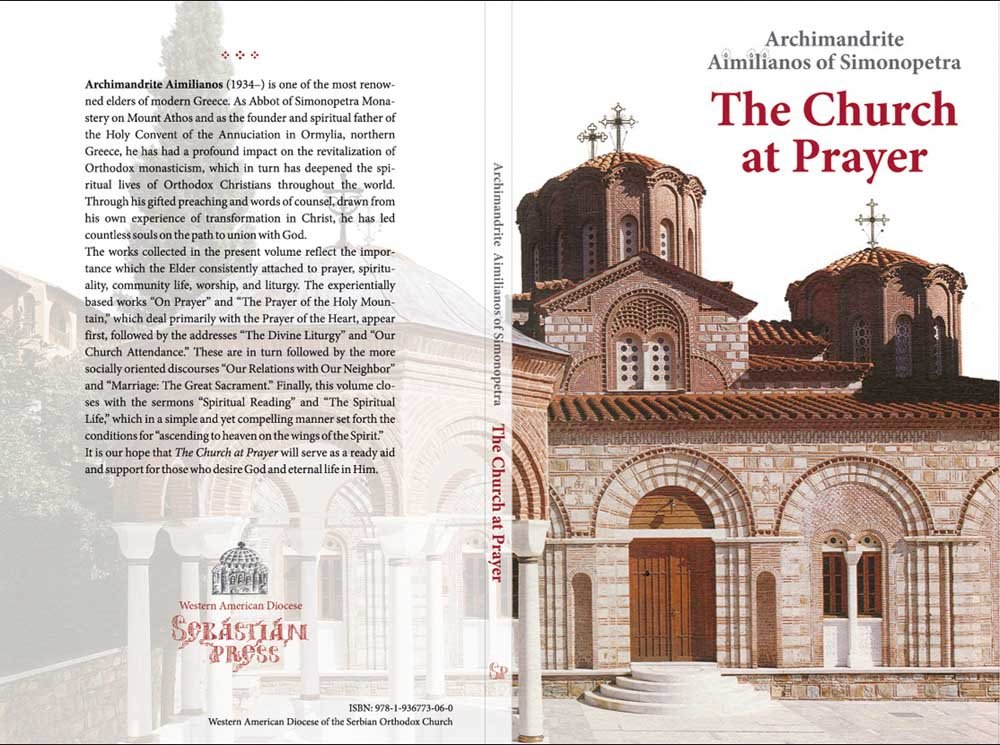
The Presence of Transcendence

Essays on Facing the Other through Holiness, History and Text

by Bogoljub Sijakovic

The essays collected in this book venture into various domains of philosophy, such as ontology and epistemology, anthropology and ethics, philosophy of history and history of philosophy, philosophy of religion and theory of the mystical, poetics and hermeneutics. The problems here thematized, which are brought to us primarily by the tradition of Hellenism and Christianity as well as life itself, are both traditional and contemporary: self-knowledge and knowledge of God, transcendence and paradoxy, theodicy and anthropodicy, sacrifice, violence, holiness, responsibility, decision-making, evil, guilt, repentance, forgiveness, memory, as well as: wisdom, suffering, good, the other, freedom, fate, history, the Balkans, war, rationality, and also: reading, dialogue, poetry, metaphysic of light.