A great man is one who collects knowledge the way a bee collects honey and uses it to help people overcome the difficulties they endure - hunger, ignorance and disease!
- Nikola Tesla

Remember, remember always, that all of us, and you and I especially, are descended from immigrants and revolutionists.
- Franklin Roosevelt

While their territory has been devastated and their homes despoiled, the spirit of the Serbian people has not been broken.
- Woodrow Wilson

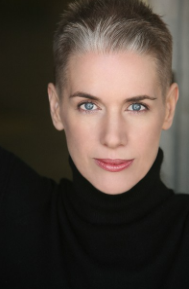
Fionn Zarubica

Fionn Zarubica, a native of Los Angeles, California, attended the University of California, Santa Barbara as well as the University of California, Los Angeles. On the theatrical side Fionn has worked for over twenty years as a costume designer, designing costumes for theater, film, ballet, opera and television in the United States, Canada and Europe. On the museum side, she has worked at the Autry National Center, on the Southwest Museum of the American Indian Preservation Project, and in January of 2006 joined the department of Costume and Textiles of the Los Angeles County Museum of Art (LACMA), where she was responsible for the management and care of the museum's renowned and comprehensive costume and textile collections, and oversaw ongoing rotations of the permanent collection throughout the museum.

She contributed her skills for several exhibitions at LACMA including California Design, 1930-1965: Living in a Modern Way (2011); Fashioning Fashion: European Dress in Detail, 1700-1915 (2010); From the Spoon to the City: Design by Architects from LACMA’s Collection (2009); Art of Two Germanys/Cold War Cultures (2009) and Breaking the Mode: Contemporary Fashion from the Permanent Collection (2006) as well as the critically acclaimed Los Angeles Goes Live: Performance Art in Southern California 1970-1983 (LACE 2011) part of the Getty’s Pacific Standard Time exhibition series. In addition to serving as Managing Partner of Fionn Zarubica & Associates, Director of the Fionn Zarubica Foundation For Art And Culture in Serbia and Director of Fionn Zarubica Learn, Fionn is directing the Collections Management Certification Program in Serbia and is an instructor at the Costume and Textiles Collections Management Certificate Program at California State University Long Beach, The College of Continuing and Professional Education.

Source: Official Web Site


SA


People Directory

Bishop Mitrofan (Kodić)

(1987–2016; 2016–)

Bishop Mitrofan Kodić, nee Radovan, was born on 4 August, 1951, in the village Ljuša, Šipovo, Bosnia, Yugoslavia. Radovan completed his elementary studies in 1966. He went to study further at the seminary in the Krka monastery in Croatia, Yugoslavia. At the same time, he entered the brotherhood of the monastery. In 1970, Radovan was tonsured to be a monk, and he was given the name Mitrofan on the eve of the Feast of the Entrance of the Most Holy Mother of God into the Temple (3 December/20 November). He was ordained to the Holy Diaconate by Bishop Stefan (Boca) of Žiča. In 1971, the Hierodeacon Mitrofan (Kodić) graduated from the seminary of the Krka Monastery, while on 6 January, 1974, he was ordained to the holy priesthood in the monastery by Bishop Stefan (Boca).

In 1975, the Hieromonk Mitrofan entered the Faculty of Theology in Bucharest, Romania. He completed his studies, and he graduated in 1977. He then returned to the Krka monastery. There, he was assigned to be a “trainee” (supplent) in the Seminary of the Three Holy Hierarchs in the Krka Monastery. In 1987, the Hieromonk Mitrofan was assigned to serve as the rector of the seminary.

Read more ...

Publishing

All Roads Lead to Jackson

Serbian American Contributions in Amador County, California, since the Gold Rush
Milina Jovanović offers a unique compilation of individual and family immigration stories that include enormous contributions to the development of California and significant community involvement. In this version of people’s history she chronicles how Serbian Americans have strengthened community, region, state, and country through the endeavors and struggles of 150 years. This book also focuses on women’s contributions that are too often overlooked. Ms. Jovanović’s study reveals that Jackson not only remains an original and symbolic home to Serbian Americans and Serbian Orthodox religion, but also an oasis where the Serbian community has preserved its positive reputation and social influence.

Read more ...