A great man is one who collects knowledge the way a bee collects honey and uses it to help people overcome the difficulties they endure - hunger, ignorance and disease!
- Nikola Tesla

Remember, remember always, that all of us, and you and I especially, are descended from immigrants and revolutionists.
- Franklin Roosevelt

While their territory has been devastated and their homes despoiled, the spirit of the Serbian people has not been broken.
- Woodrow Wilson

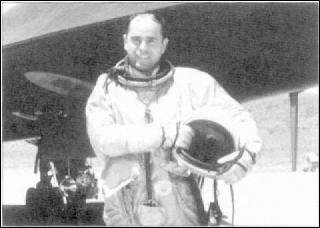
Mele "Mel" Vojvodich

Mele Vojvodich Jr. was born of Serbian ancestry on March 28, 1929 in Steubenville, Ohio. He went on to become Major-General in the USAF. For his bravery he was awarded the Legion of Merit.

Looking back at the career, Vojvodich received his pilot wings in 1950 from Nellis Air Force Base in Nevada. Six years later, he graduated from Squadron Officer School at Maxwell Air Force Base in Alabama. During 1971, he completed his studies at National War College Fort Lesley J. McNair in Washington DC.

.

Vojvodich served as an F-84 pilot and aircraft commander in the early 1950's at Turner Air Force Base in Georgia. He then saw action in South Korea, flying F-80's and F-86's. He also made a 300 mile surveillance flight into China searching for, and ultimately finding, secret Soviet-made bombers.

In all, Vojvodich flew 125 combat missions. He is also one of only five initial pilots who flew the CIA's spy plane (A-12) in North Vietnam. His time spent in the air was a total of 6,000 flying hours. On May 1, 1980, Vojvodich was promoted to Major-General.

Some of his worthy military awards also include the Distinguished Service Medal, Distinguished Service Cross, Distinguished Flying Cross and the Intelligence Star for Valor presented by the CIA. He retired in March of 1983. Maj-Gen Vojvodich passed away on November 3rd, 2003 at his home in Schertz, Texas after suffering from leukemia.

SA


People Directory

Sava Vemić

Sava Vemić (born 1987), bass, comes from Belgrade, Serbia. He is a member of The Metropolitan Opera’s Lindemann Young Artist Development Program in the season 2014/2015.

He studied singing in the Music School Mokranjac with prof. Tanja Obrenović and later at the Faculty of Music, University of Arts in Belgrade with prof. Nikola Mijailović. In Mozart’s Magic flute he made his debut as Sarastro at the opera stage of Madlenianum Opera & Theatre in Belgrade. He received scholarships from the International Vocal Arts Institute (IVAI) in 2013 when he sang Bartolo in an IVAI production of Le nozze di Figaro and in July 2014 when he sang Osmin in their production of Die Entführung aus dem Serial in Tel Aviv, Israel. In June 2014 he made his Carnegie Hall debut as Sir Walter Raleigh in Donizetti’s opera Roberto Devereux with The Opera Orchestra of New York led by Mo. Queler. In 2012 he performed at the Esterhazy festival in Haydnsaal, Austria.

.

Read more ...

Publishing

Holy Emperor Constantine and the Edict of Milan

by Bishop Athanasius (Yevtich)

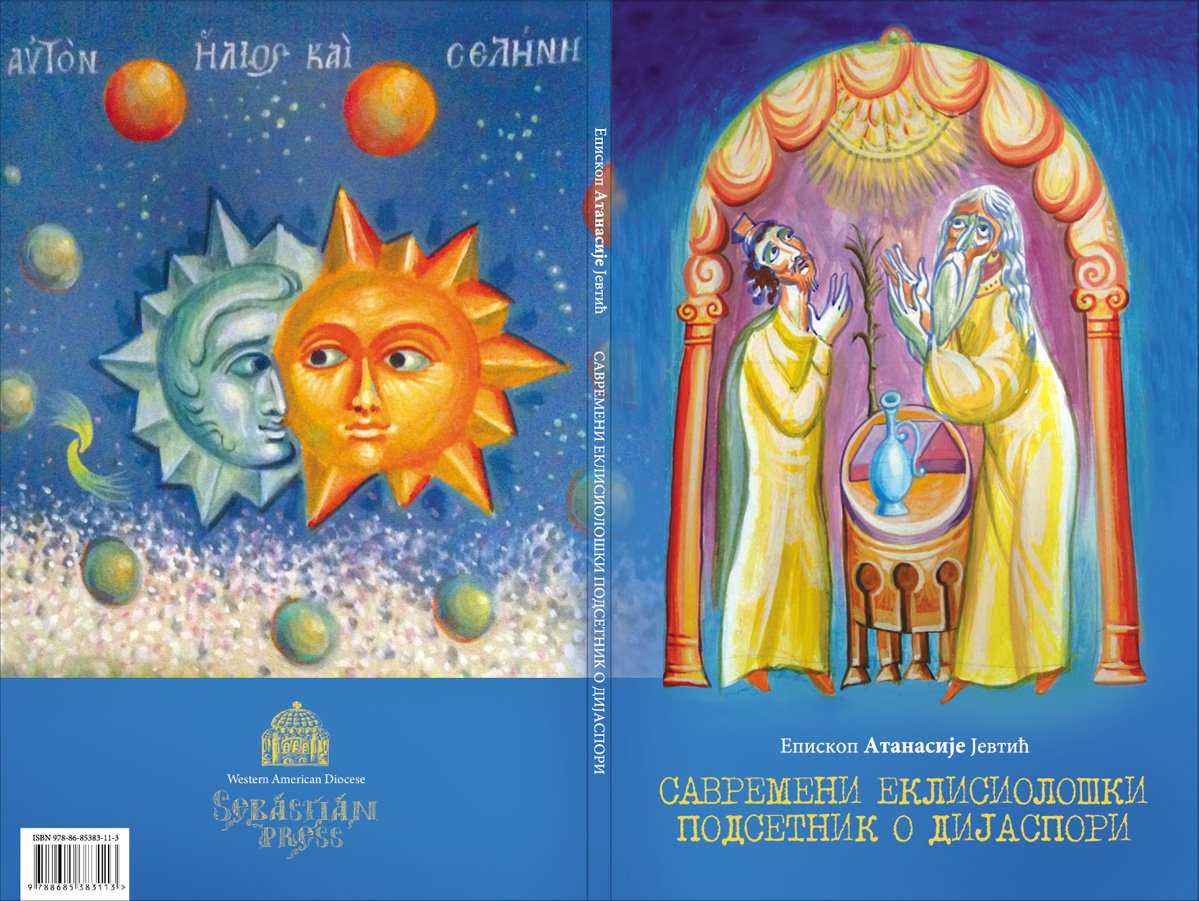
In 2013 Christian world celebrates 1700 years since the day when the Providence of God spoke through the holy Emperor Constantine and freedom was given to the Christian faith. Commemorating the 1700 years since the Edict of Milan of 313, Sebastian Press of the Western American Diocese of the Serbian Orthodox Church published a book by Bishop Athanasius Yevtich, Holy Emperor Constantine and the Edict of Milan. The book has 72 pages and was translated by Popadija Aleksandra Petrovich. This excellent overview of the historical circumstances that lead to the conversion of the first Christian emperor and to the publication of a document that was called "Edict of Milan", was originally published in Serbian by the Brotherhood of St. Simeon the Myrrh-gusher, Vrnjci 2013. “The Edict of Milan” is calling on civil authorities everywhere to respect the right of believers to worship freely and to express their faith publicly.

The publication of this beautiful pocket-size, full-color, English-language book, has been compiled and designed by Bishop Athanasius Yevtich, a disciple of the great twentieth-century theologian Archimandrite Justin Popovich. Bishop Athanasius' thought combines adherence to the teachings of the Church Fathers with a vibrant faith, knowledge of history, and a profound experience of Christ in the Church.

In the conclusion of the book, the author states:"The era of St. Constantine and his mother St. Helena, marks the beginning of what history refers to as Roman, Christian Empire, which was named Byzantium only in recent times in the West. In fact, this was the conception of a Christian Europe. Christian Byzantine culture had a critical effect on Europe; Europe was its heir, and then consciously forgot it. Europe inherited many Byzantine treasures, but unfortunately, also robbed and plundered many others for its own treasuries and museums – not only during the Crusades, but during colonial rule in the Byzantine lands as well. We, the Orthodox Slavs, received a great heritage of the Orthodox Christian East from Byzantium. Primarily, Christ’s Gospel, His faith and His Church, and then, among other things, the Cyrillic alphabet, too."