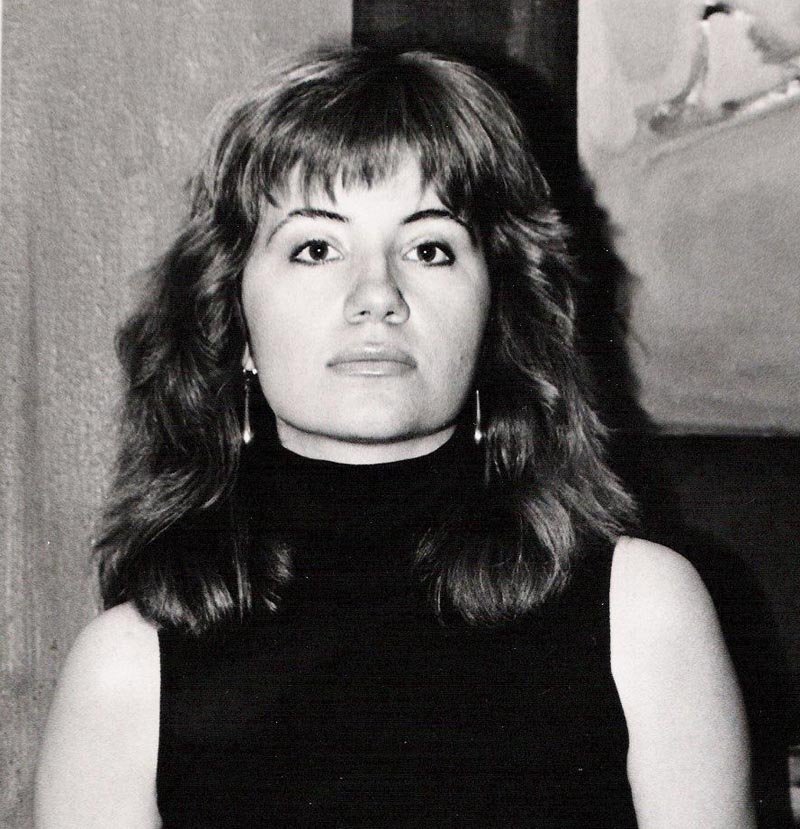
Anna Novakov (October 2, 1959) is a Serbian-American art historian, critic, educator and curator based at Saint Mary's College of California. A prolific writer, Novakov has received numerous awards and grants for her research and art criticism. In addition to her published essays, collaborations with artists, museum catalogues and exhibition reviews, she is the primary contributor and editor of more than ten books.
.Anna Novakov holds a bachelor's degree from the University of California, Berkeley, a master's degree from the University of California, Davis, and a doctorate from New York University in the History of Art and Art Education under the direction of Professor Angiola Riva Churchill and Professor David Ecker.
From 1992 until 2003, Novakov taught courses in the history of art, gender and visual culture at the San Francisco Art Institute. Her students included Nao Bustamante, Felipe Dulzaides, Mads Lynnerup, Matmos, Guy Overfeld, Nuno Pedrosa, Kehinde Wiley and many other emerging artists. In 2004 she was tenured as a professor of art history and women’s studies at Saint Mary’s College of California – a liberal arts college. While at Saint Mary’s, Novakov has explored the role that public spaces (both physical and virtual) can play in undergraduate pedagogical development.
Anna Novakov has been curator of a number of European exhibitions that melded public space and gender with contemporary installation art. Working with Swedish artist, Jorgen Svensson, Novakov conceptualized Public Safety (2000) – an exhibition held in Hammaro, Sweden. In 2005, Novakov collaborated with Swiss artist and writer Denise Ziegler on Moving Target – an international exhibition of public art in Helsinki, Finland.
In 1989, Novakov came to prominence in Manhattan as one of the first art critics to write about the role of gender in contemporary public art. Her writings on artists such as Marina Abramovic, Dennis Adams, Shimon Attie, Tony Labat, Inigo Manglane-Ovalle, Michael Rakowitz, and Andrea Zittel has formed the basis for public art studies – an academic branch of art history and visual culture.
For the past ten years, her work has explored art, gender and interwar architecture in the Netherlands, France, Austria and Germany. During this time Novakov has written extensively about the role of gender in the architectural work of Eileen Gray, Charlotte Perriand, Lily Reich, and Grete Schutte-Lihotzky.
Currently, Novakov is writing about the history of the Eastern European modernism (from 1900–1945) and its impact on avant-garde artists and architects working in Croatia, Serbia and Slovenia. Her in-depth analysis of works by Ivana Tomljenovic and Milena Pavlovic-Barilli is the first by a historian living outside of the Balkans.
Books:
- Veiled Histories: The Body, Place and Public Art (1997)
- Carnal Pleasures: Desire, Contemporary Art and Public Space (1998)
- The Artistic Legacy of Le Corbusier’s machine à habiter (2008)
- Essays on Women's Artistic and Cultural Contributions 1919-1939: Expanded Social Roles for the New Woman following the First World War (2009)