A great man is one who collects knowledge the way a bee collects honey and uses it to help people overcome the difficulties they endure - hunger, ignorance and disease!
- Nikola Tesla

Remember, remember always, that all of us, and you and I especially, are descended from immigrants and revolutionists.
- Franklin Roosevelt

While their territory has been devastated and their homes despoiled, the spirit of the Serbian people has not been broken.
- Woodrow Wilson

Serbs Run in Belgrade to Show Solidary With Boston

ABC News ]

Dozens of people have run in the Serbian capital of Belgrade to express solidary with the victims of the Boston Marathon bombings.

.

That's in a country where anti-American sentiment still runs high over the 1999 U.S.-led NATO bombing of Serbia.

The race — dubbed "Boston We Are With You" — was organized Tuesday through social networking sites. Milan Miletic, one of the organizers, says "there should be no violence in sports because it should unite people and overcome borders."

The participants ran past the ruins of government buildings destroyed during the NATO air war that forced Serbia to relinquish control of its former province of Kosovo. The runners paused by the American embassy, where they left a message of support.

SA


People Directory

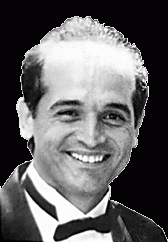
Marko V. Jaric

Marko V. Jaric was born on March 17, 1952 in Belgrade. He completed his elementary school education in Belgrade and attended the Air Force Military High School in Mostar where he graduated in 1970 as the best student of his class. Subsequently he enrolled at the Faculty of Natural Sciences and Mathematics where he received a degree in physics in 1974, graduating as the best student of his generation. He received his Ph.D. in 1978 at the City University of New York with professor Joseph Birman, one of the most prominent physicists in solid-state physics, as his thesis advisor.

. Read more ...

Publishing

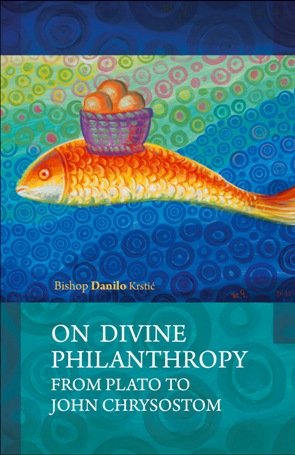
On Divine Philanthropy

From Plato to John Chrysostom

by Bishop Danilo Krstic

This book describes the use of the notion of divine philanthropy from its first appearance in Aeschylos and Plato to the highly polyvalent use of it by John Chrysostom. Each page is marked by meticulous scholarship and great insight, lucidity of thought and expression. Bishop Danilo’s principal methodology in examining Chrysostom is a philological analysis of his works in order to grasp all the semantic shades of the concept of philanthropia throughout his vast literary output. The author overviews the observable development of the concept of philanthropia in a research that encompasses nearly seven centuries of literary sources. Peculiar theological connotations are studied in the uses of divine philanthropia both in the classical development from Aeschylos via Plutarch down to Libanius, Themistius of Byzantium and the Emperor Julian, as well as in the biblical development, especially from Philo and the New Testament through Origen and the Cappadocians to Chrysostom.

With this book, the author invites us to re-read Chrysostom’s golden pages on the ineffable philanthropy of God. "There is a modern ring in Chrysostom’s attempt to prove that we are loved—no matter who and where we are—and even infinitely loved, since our Friend and Lover is the infinite Triune God."

The victory of Chrysostom’s use of philanthropia meant the affirmation of ecclesial culture even at the level of Graeco-Roman culture. May we witness the same reality today in the modern techno-scientific world in which we live.